
VIP member
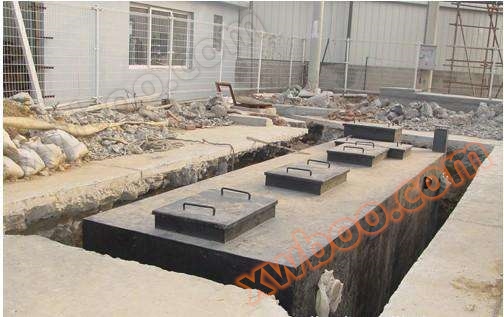
Slaughter wastewater treatment process
Slaughter wastewater treatment process
Product details
Source of sewage
The main sources of slaughter wastewater are: wastewater containing gastrointestinal contents discharged from livestock and poultry pen washing and dissection workshops; Ground flushing water, etc. The wastewater generated during the slaughtering process of livestock and poultry contains a large amount of pollutants such as small meat shavings, broken internal organs, hair, oil and fat, undigested food, and feces, with an uncomfortable blood red color and an unpleasant bloody smell. It is a typical type of organic wastewater, which generally does not contain heavy metals, toxic chemicals, and is rich in protein, oil, and salt.
Overview of Processing Methods
Our company has designed a set of treatment methods for slaughter wastewater based on the characteristics of livestock and poultry slaughter wastewater treatment, combined with the actual situation of similar wastewater in the past and the existing mature wastewater treatment processes.
Wastewater has the following characteristics:
1. Has a certain blood red color, mainly composed of blood lipids;
2. It has a bloody smell, mainly composed of blood lipids and protein breakdown products;
3. It contains a large amount of suspended solids, mainly composed of animal fur, meat scraps, bone fragments, visceral debris, undigested food, and feces.
4. Contains high levels of animal fats and oils
5. Contains a large amount of Escherichia coli.
According to the characteristics of the sewage and the requirements for the treated effluent, the pre-treatment process in the early stage of this type of sewage treatment should be adoptedPhysical and chemical processing technologyDue to BOD/CODD ≥ 0.4, sewage has biodegradability, and biological contact oxidation process can be used for advanced treatment of sewage in the later stage. When the concentration of oil in the wastewater exceeds 40mg/L, the oil adheres to the surface of the biofilm, blocking the contact between the wastewater and the biofilm, which will reduce the efficiency of biochemical removal; Wastewater contains a large amount of pig hair, meat shavings, bone shavings, visceral debris, etc., which are not easy to biodegrade. This is because the wastewater must undergo necessary pretreatment and physicochemical treatment in the early stage to minimize the suspended solids and oil content entering the biological contact oxidation equipment, ensuring the normal operation of the integrated biological contact oxidation equipment.
This type of sewage is basically planned to be usedair flotation+A/OBiological contact oxidationA processing method that combines craftsmanship.
Effluent standards and treatment processes
A/O biological contact oxidation process
It can meet the discharge standards for water pollutants in the meat processing industry (GB13457-92) and the slaughter and processing of livestockSecondary emissionsstandard.
Project indicators |
Inlet water quality (mg/l) |
Outlet water quality (mg/l) |
CODCr |
≤3000 |
≤120 |
BOD5 |
≤1200 |
≤60 |
SS |
≤1000 |
≤120 |
NH3-N |
≤150 |
≤25 |
Animal and vegetable oils |
≤200 |
≤20 |
Introduction to sewage treatment process
Coagulation air flotation separation process
Air flotation equipment is a device used to remove suspended solids, oils, and various gelatinous substances from various industrial and municipal wastewater.
Air flotation is a water treatment method that separates water and suspended solids by causing suspended solids to adhere to bubbles and rise to the water surface. It can also make the surfactant in water attach to the bubble surface and float, so as to separate from water, which is called foam flotation method. The air flotation equipment includes the main body of the equipment that completes the separation process and the accessory parts that generate bubbles. In water treatment, air flotation method can be used in situations where precipitation method is not applicable, to separate suspended solids with a density close to water and difficult to precipitate, such as oil, fiber, algae, etc. The main method to remove SS is to use air flotation. After adding coagulants and flocculants, the wastewater enters the mixing zone of air flotation and comes into contact with the released dissolved water, causing the flocculants to adhere to fine bubbles before entering the air flotation zone. Under the action of buoyancy, flocs float towards the water surface to form floating scum. The clear water in the lower layer flows through the collector to the clear water tank, and a part of it is refluxed for use as dissolved air. The remaining clear water flows out through the overflow port. After the floating slag on the surface of the air flotation tank accumulates to a certain thickness, it is scraped into the sludge tank of the air flotation machine by a scraper and discharged.
AO process
The organic content in slaughter wastewater is relatively high, BOD5/CODcr≥0.45, The biodegradability is good, so using biological treatment methods is more economical. The WSZ-AO series buried integrated sewage treatment equipment mainly relies on the AO biological treatment process in the sewage treatment process. The AO biological treatment process is divided into two parts: A-grade (anaerobic) and O-grade (aerobic). The working principle is at level A. Due to the high concentration of organic matter in wastewater, microorganisms are in a state of hypoxia. At this time, microorganisms are alkaline microorganisms that synthesize new cellular substances from organic nitrogen sources and ammonia nitrogen in wastewater. A-level tanks not only have a certain function of organic matter removal, reducing the organic load of subsequent aerobic tanks to facilitate nitrification, but also rely on the high concentration of organic matter in the raw water to complete denitrification and ultimately eliminate nitrogen eutrophication pollution. In O-level, due to the significant decrease in organic matter concentration, there is still a certain amount of organic matter and high ammonia nitrogen present. In order to further oxidize and decompose organic matter, an aerobic biological contact oxidation tank with low organic matter load is set up in the O-level tank after carbonization is completed for the smooth progress of subsequent nitrification. Aerobic microorganisms decompose organic matter into carbon dioxide and water; Autotrophic bacteria use inorganic carbon produced by the decomposition of organic matter or carbon dioxide in the air as a nutrient source to convert ammonia nitrogen in wastewater into nitrite and nitrate nitrogen. The effluent from the O-grade tank flows back to the A-grade tank, providing electron donors for the A-grade tank and ultimately eliminating pollution through denitrification.
After sales service of the company
1. Our company fully implements the "three guarantees" policy, with a term of one year. If there are quality problems with the product within one year, our factory provides repair, replacement, and refund services. After the "three guarantees" period, if the parts are damaged and need to be replaced, our factory will only charge the cost of the parts.
2. Our company provides 24-hour technical consulting services. Professional technicians are available at any time to provide technical services such as installation, debugging, and maintenance. Users can contact our company at any time. Our company will provide you with the fastest and most thoughtful service to solve your problems in a timely manner.
3. For users who use our company's products, we will conduct regular follow ups and retraining every quarter
4. If there are any shortcomings in our service, you can call or write to complain and provide your valuable opinions and suggestions to improve our service. We would like to express our sincere gratitude for this!
| Underground sewage treatment equipment | Horizontal flow dissolved air flotation machine |
Online inquiry
-
Contacts
-
Company
-
Telephone
-
Email
-
WeChat
-
Verification Code
-
Message Content
-